Housing Market Analysis
for Adults with A/IDD
A comprehensive PESTEL & SWOT analysis of the housing landscape for adults with Autism and Intellectual/Developmental Disabilities across the Delaware Valley and Lehigh Valley — with a strategic focus on homeownership and equity-building opportunities.
Delaware Valley (Bucks, Montgomery, Chester, Delaware & Philadelphia) · Lehigh Valley (Lehigh & Northampton)
By the Numbers
Data from the PA Waiting List Campaign, CDC, ODP, and PHFA — statewide and across the Delaware Valley and Lehigh Valley.
✅ Counted in PUNS
- • Adults 21+ with an intellectual disability (ID) or autism diagnosis who have a Level of Care (LOC) determination from ODP
- • Individuals actively registered and categorized by urgency: Emergency (immediate need), Critical (need within 1 year), or Planning (need within 1–5 years)
- • People whose primary caregiver is 60+ or in declining health (typically Emergency tier)
- • Individuals currently in crisis housing or at risk of institutionalization
❌ Not Counted in PUNS
- • Adults who have never contacted their county’s Supports Coordination Organization (SCO) — estimated to be the majority of the I/DD population
- • Individuals with a diagnosis but no formal ODP Level of Care determination
- • Adults currently “fully served” by a waiver (excluded from the PUNS count by definition)
- • Those who gave up after years of waiting and stopped re-registering
- • Anyone seeking homeownership specifically — the PUNS system has no housing-type or tenure category
- • Adults with mild I/DD who are employed and living semi-independently but lack equity or ownership
Bottom line: The 7,663 statewide PUNS figure represents the tip of the iceberg — only those who are registered, have an LOC determination, and are actively seeking ODP-funded services. Using a 1% population prevalence baseline (CDC/Arc methodology), Pennsylvania’s true adult I/DD population is estimated at ~130,000, meaning the PUNS list captures fewer than 6% of the total population. Source: PA ODP PUNS Monthly Report, Dec 31, 2024; CDC Disability & Health Data System; The Arc of the United States.
"Of the estimated 75,000 adults with I/DD in the Valleys, only 2,897 are on the PUNS waiting list — roughly 4% of the true population. The other 96% are invisible to the system, but not to the housing market."
The remaining ~72,100 are not on any waiting list — either because they are currently supported by aging family caregivers, have never engaged the ODP system, or were told the wait is too long to bother. Every one of them will need permanent, stable, equity-building housing at some point in their lifetime. That is the true scale of the unmet market. And almost none of it exists.
The waitlist undercounts reality. Many families never apply — either because they don't know the system exists, have lost hope after decades of waiting, or were told not to bother. The 4,392 figure is a floor, not a ceiling.
Homeownership is invisible in the data. No state or federal database tracks equity-based housing for adults with I/DD. The number of adults in ownership models is effectively zero — not because it isn't needed, but because it has never been systematically built.
Aging caregivers don't report the crisis. Most families managing a housing cliff do so silently, out of fear of losing services or being separated from their loved one. The 1,290 estimate almost certainly understates the true number.
How We Got Here
Understanding the present crisis requires confronting the past. The near-total absence of homeownership for adults with A/IDD is not an accident — it is the legacy of over a century of deliberate exclusion, institutionalization, and systemic neglect.
Pennsylvania's Most Notorious Institution — Right Here in Chester County
Pennhurst State School and Hospital operated for 79 years — from 1908 to 1987 — on a 1,400-acre campus in Spring City, Chester County. Over its lifetime, more than 10,500 individuals were institutionalized there. At its peak, 3,500 people lived in conditions a federal court would later describe as a violation of their constitutional rights.
The Pennhurst story is not ancient history. It is the direct predecessor of today's housing crisis. The same population that was warehoused at Pennhurst now waits — 11,462 strong — on Pennsylvania's IDD services waiting list. The institution closed. The gap never did.
Pennhurst Opens
The Eastern Pennsylvania Institution for the Feeble Minded and Epileptic opens in Chester County — designed for 500 residents. Eugenics-era thinking frames disability as a threat to be segregated from society.
Overcrowding Reaches Crisis
Pennhurst swells to 3,500 residents. Conditions deteriorate severely. Residents labor in fields and workshops. Critics call it peonage. The institution spends less per day feeding residents than local zoos spend on animals.
"Suffer the Little Children"
Philadelphia newsman Bill Baldini broadcasts a five-part exposé on Channel 10. His camera finds half-clothed children wandering aimlessly, caged residents, and a cacophony of neglect. "These unfortunates are being deprived of their dignity and self-respect," Baldini says. "Why? Because only a very, very few seem to care."
Halderman v. Pennhurst
A landmark federal class action, filed on behalf of Terri Lee Halderman — a young woman who suffered unexplained injuries during her decade at Pennhurst — results in a District Court ruling that Pennhurst violated the constitutional rights of its residents.
Supreme Court Justice Marshall Speaks
U.S. Supreme Court Justice Thurgood Marshall denounces the "regime of state-mandated segregation and degradation... that in its virulence and bigotry rivaled, indeed paralleled, the worst features of Jim Crow."
Pennhurst Closes
After 79 years of operation and over 10,500 individuals institutionalized on its 1,400-acre campus, Pennhurst closes under the weight of legal settlements. The campus sits vacant for decades — and is later converted into a haunted house attraction.
Olmstead v. L.C.
The U.S. Supreme Court rules in Olmstead v. L.C. that unjustified institutionalization of people with disabilities constitutes discrimination under the ADA. States are legally required to provide community-based services. The era of deinstitutionalization becomes law.
The Housing Gap Remains
Despite Olmstead, 11,462 Pennsylvanians with I/DD remain on a waiting list for community-based services. 87% of autistic young adults still live with parents. The system funds support services — but builds no homes. Homeownership for this population remains virtually nonexistent.
Why Homeownership Is the Answer
Every housing model that followed Pennhurst — group homes, supported living, life sharing — was built on rental and service-delivery frameworks. None of them transferred wealth. None of them gave residents a stake in their own future. Neuroinclusive Planned Communities with equity-based ownership are the first model in this population's history designed to do both — and to do it at scale.
The Crisis, County by County
Select a data layer to visualize the scale of the I/DD housing gap across the Delaware Valley and Lehigh Valley. Click any county marker for detailed statistics.
Adults on PA ODP waiting list as of Dec 31, 2025 · PA Waiting List Campaign
Click a county marker
to see detailed statistics
Source: PA Waiting List Campaign · PUNS data as of December 31, 2025
PESTEL Analysis
A macro-environmental scan of the six forces shaping the A/IDD housing market in southeastern Pennsylvania. Each factor is rated for its current strategic impact on homeownership and equity models.
Strong Political Tailwinds
Governor Shapiro's $354.8M investment in IDD services signals strong political will, while federal Olmstead mandates and the VITAL Act create a favorable legislative environment for community-based housing.
PESTEL Impact Radar
Strategic impact rating (1–5) of each macro-environmental factor on the A/IDD homeownership market.
SWOT Analysis
A strategic assessment of the internal and external factors affecting homeownership and equity-based housing models for A/IDD adults in southeastern Pennsylvania.
Strengths
Internal capabilities and advantages that position equity-based A/IDD housing for success.
Market Data
Quantitative evidence of the housing gap, affordability crisis, and growing demand for A/IDD homeownership solutions in southeastern Pennsylvania.
PA IDD Waiting List Breakdown
11,462 total on waiting list as of Dec 31, 2025 · PA Waiting List Campaign
Autism Prevalence Growth
Rate per 100 children · CDC ADDM Network · 1992–2022
Median Home Price by County
Estimated median ($000s) · SE Pennsylvania · Dec 2025 · Coldwell Banker Hearthside
The Affordability Gap
Monthly income vs. housing costs for IDD adults on SSI · SE Pennsylvania
Key Insight: At 30% of income, an IDD adult on SSI can afford only $283/month in housing costs — less than one-quarter of average SE PA rents. This structural gap is why stacked financing and equity models are essential.
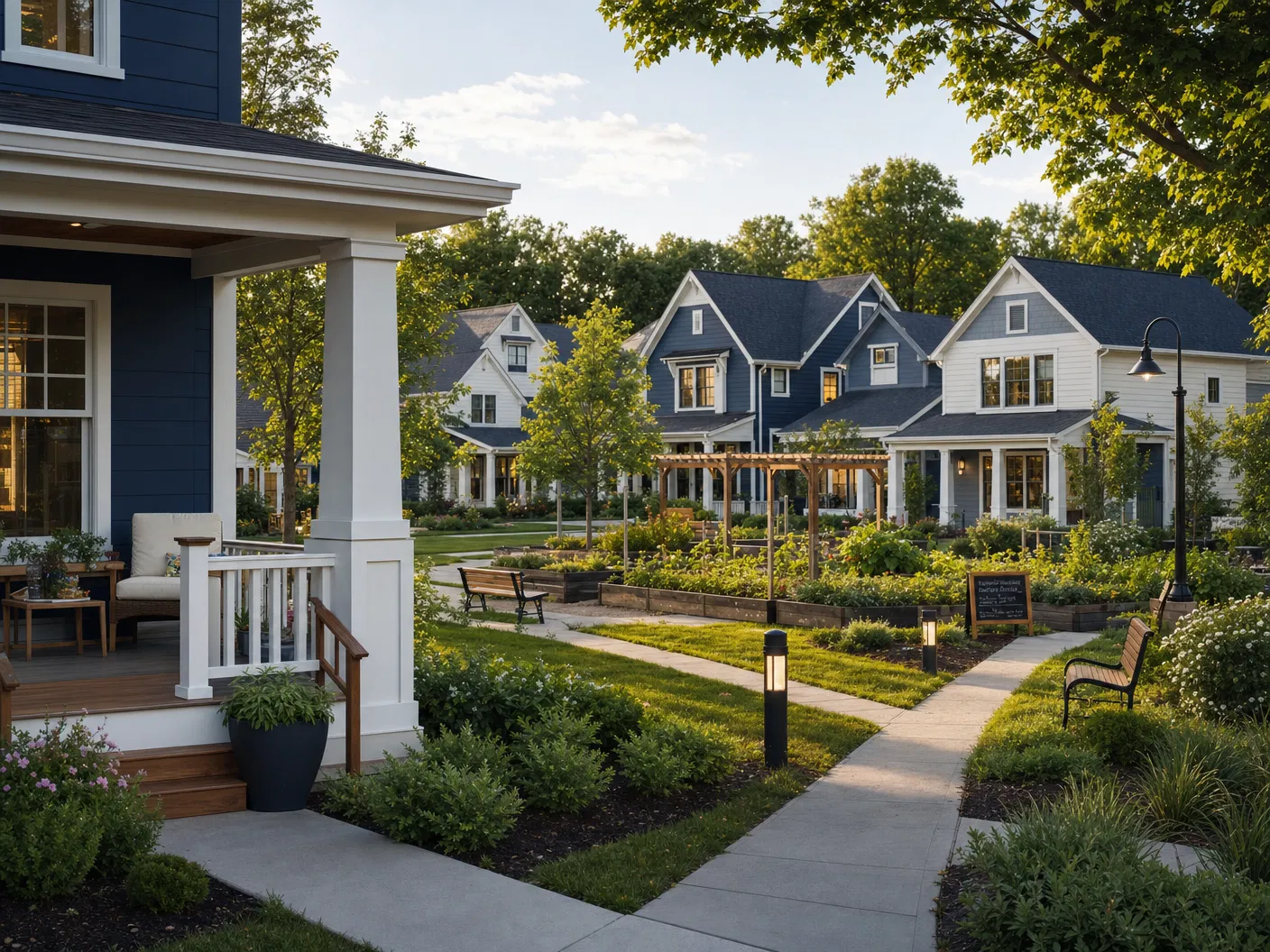
What We Are Building
Coliving Homes in a Neuroinclusive Planned Community — where adults with autism, Down syndrome, cerebral palsy, and other I/DDs can own their homes, build equity, and live with dignity.
Financing & Incentive Stack
Equity-based A/IDD housing requires stacking multiple funding sources. Public programs and private capital are equally essential — and equally compelling for the right partners.
PA Neighborhood Assistance Program (NAP/SPP)
Pennsylvania's NAP program allows businesses to contribute cash, equipment, real estate, or technical assistance to approved nonprofit projects and receive up to 90–95% back as a PA state tax credit. Contributions may also count toward Community Reinvestment Act (CRA) compliance. A $100,000 contribution costs as little as $10,000 after credits. Credits carry forward 5 years and are fully transferable.
Public funding includes federal and state programs, tax credits, block grants, and government-backed financing tools. These sources are essential infrastructure for the capital stack — but they fund services and development, not homeownership itself.
PA businesses contributing to approved nonprofit housing projects receive up to 95% back as a PA state tax credit. $72M program. May also count toward CRA compliance.
Low Income Housing Tax Credits — competitive but available for disability-inclusive affordable housing developers. Administered by PHFA.
PHFA-administered Project Rental Assistance for extremely low-income persons with disabilities. Pairs with LIHTC projects.
Pennsylvania Housing Finance Agency program for homebuyers with disabilities — bridges the down payment gap for equity-based ownership.
Funds the support services (not housing costs) that make homeownership viable. The waiver follows the person — not the building.
Community Development Block Grants and HOME Investment Partnerships — available through county commissioners for affordable housing development.
Governor Shapiro's Feb 2026 Housing Action Plan proposes a $1B Critical Infrastructure Investment Fund (pending legislative approval). PA faces a 185,000-home shortfall by 2035. No disability-specific carve-out yet — a critical advocacy gap and first-mover opportunity.
Savings vehicle for IDD adults that doesn't count against SSI/Medicaid asset limits. Critical bridge for homeownership planning.
The PORCH℠ Framework
A proprietary five-phase methodology for building Neuroinclusive Planned Communities where adults with I/DD own their homes, build equity, and live with belonging — not just managed care.
“Loneliness is my least favourite thing about life. The thing that I’m most worried about is just being alone without anybody to care for or someone who will care for me.”— Anne Hathaway, Academy Award-winning actress · Interview Magazine
Anne Hathaway’s fear is universal. But for the estimated 75,000 adults with I/DD across the Delaware Valley and Lehigh Valley, it isn’t just a fear — it reflects a real infrastructure gap that the housing market has never been designed to solve.
Living alone is not just impractical for most adults with I/DD — it is isolating in ways that cause measurable harm. Federal law (Olmstead, ADA, Fair Housing Act) mandates community integration and family-style living. The PORCH℠ model delivers exactly that: shared community, known neighbors, mutual support — and real equity ownership.
Why Fractional Ownership Is the Answer
The affordability gap between SSI income and Valley home prices cannot be closed by any single funding source. Fractional ownership stacks public, private, and philanthropic capital to make homeownership achievable — while preserving the community living model that I/DD adults need.
Lifelong Housing Demand
Virtually every adult with I/DD will need permanent, stable housing at some point in their lifetime. Not just the 4,392 on the waitlist today — but all 75,000 across the Valleys. The market has never been built for this demand.
Community Over Isolation
Independent solo living is impractical and harmful for most I/DD adults. The PORCH℠ model replicates the family home environment — shared common spaces, known neighbors, mutual support — in a setting residents actually own.
Equity That Outlasts Caregivers
Fractional ownership means the resident builds real equity — not just occupancy rights. When a caregiver passes, the resident's home remains theirs. The 'Life After Us' promise is fulfilled through ownership, not placement.
The Three-Phase Lifecycle
From transitional living to lifelong homeownership to aging in community — the PORCH℠ model follows residents across their entire adult life.
Transitional Living — The Bridge to Independence
The Welcome Mat phase provides structured transitional housing for young adults with I/DD as they move from the family home to independent adulthood. Residents develop life skills, build community relationships, and prepare for homeownership — all within a neuroinclusive environment designed for belonging, not just management.
How Fractional Ownership Becomes Affordable
No single funding source can bridge the gap between SSI income ($943/mo) and Valley home prices ($350K–$550K). The PORCH℠ model stacks five layers of capital — public, private, and philanthropic — to make homeownership achievable without compromising SSI or Medicaid eligibility.
The same capital stack, zoning strategy, and community design can be deployed in any Pennsylvania county — or any state — using the PORCH℠ Framework.
Designed to work within Olmstead, ADA, Fair Housing Act, HCBS settings rule, and Governor Shapiro's Housing Action Plan — no new legislation required.
Front Porch Cohousing owns the PORCH℠ methodology. MP Equity Holdings is the first licensed operator. Sub-licensing to developers, housing authorities, and nonprofits creates a recurring revenue model that offsets resident ownership costs.
Fewer than 10 organizations nationally are building ownership-based neuroinclusive communities at scale. The Valleys represent the first proof of concept — and the template for national replication.
Strategic Outlook
Synthesizing the PESTEL and SWOT findings into actionable strategic priorities for investors, sponsors, and mission-driven partners.
Capitalize on the Political Window
Governor Shapiro's $354.8M investment and the NAP program expansion to $72M represent a rare alignment of political will and financial incentive. The window for first-mover positioning in equity-based A/IDD housing is open — but will not remain so indefinitely. Early-stage sponsors and capital contributors who act now will benefit from the most favorable tax credit terms and greatest reputational upside.
Stack Financing to Bridge the Affordability Gap
No single funding source can bridge the gap between SSI income and SE Pennsylvania home prices. The winning model stacks NAP/SPP tax credits (corporate), LIHTC (developer), PHFA ACCESS (buyer), PA ABLE (resident savings), and Medicaid HCBS waivers (services) into a comprehensive capital structure. This complexity is a barrier to entry — and a competitive moat for experienced developers.
Build the PORCH℠ Model for Scale
The PORCH℠ licensed framework for Neuroinclusive Planned Communities creates a replicable, scalable model that can be deployed across Pennsylvania and beyond. Licensing revenue offsets ownership costs for IDD adults, while the brand creates a recognizable standard of quality that attracts sponsors, donors, and families. First-mover advantage in SE Pennsylvania establishes the proof of concept.
Competitive Landscape
Comparison of housing models for A/IDD adults in southeastern Pennsylvania.
| Model | Equity for Resident | Dignity & Autonomy | Scalability | Funding Complexity | Loneliness Risk |
|---|---|---|---|---|---|
| Group Home | None | Low | High | Low | High |
| Supported Indep. Living (Rental) | None | Medium | Medium | Medium | Medium |
| Family Home | None | Medium | None | Low | High |
| ICF/ID (Institutional) | None | Very Low | High | Low | Very High |
| Life Sharing | None | Medium | Low | Low | Medium |
| Neuroinclusive Planned Community (Equity) | Yes ✓ | High | High (PORCH℠) | High | Low |
Top Risks to Monitor
Strategic Advantages
11,462 statewide. 4,392 in your backyard.
What do you think should happen?
This analysis exists to start conversations — not end them. Whether you're a policymaker, a parent, a funder, or someone who simply believes that every person deserves a home of their own, your perspective matters. The housing cliff is real. The solutions are possible. The question is who shows up.
Schedule a Conversation
30 minutes. No agenda, no ask. Just a conversation about what you see in this data and what you think the right response looks like.
Book a 30-Minute Call →Share This Analysis
Forward this to a colleague, a board member, a foundation officer, or a legislator. The more people who understand the gap, the more likely it closes.
Share on LinkedIn →Explore the Model
See how Front Porch Cohousing is building Pennsylvania's first Neuroinclusive Planned Community — where adults with I/DD own their homes and build real equity.
Visit frontporchcohousing.org →"The institution closed in 1987. The gap it left behind has never closed. Every year we wait, another cohort of young adults with I/DD ages into a system with no room for them — and another generation of parents across the Delaware Valley and Lehigh Valley runs out of time."
Download the Complete Analysis
The full 2025–2026 Philadelphia / Lehigh Valley A/IDD Housing Market Report includes all PESTEL dimensions, SWOT matrices, county-level data, the PORCH℠ capital stack, and the complete financing guide — formatted for sponsorship pitching and policy briefings.
PA A/IDD Housing Market Analysis
Philadelphia / Lehigh Valley Region
Enter your name and email below to access the full report. Your information is kept confidential and will only be used to send you relevant updates on PA A/IDD housing research.